
Your First Night on a Phinisi: What Sleeping on Board Is Really Like

admin
July 31, 2026
9 min read
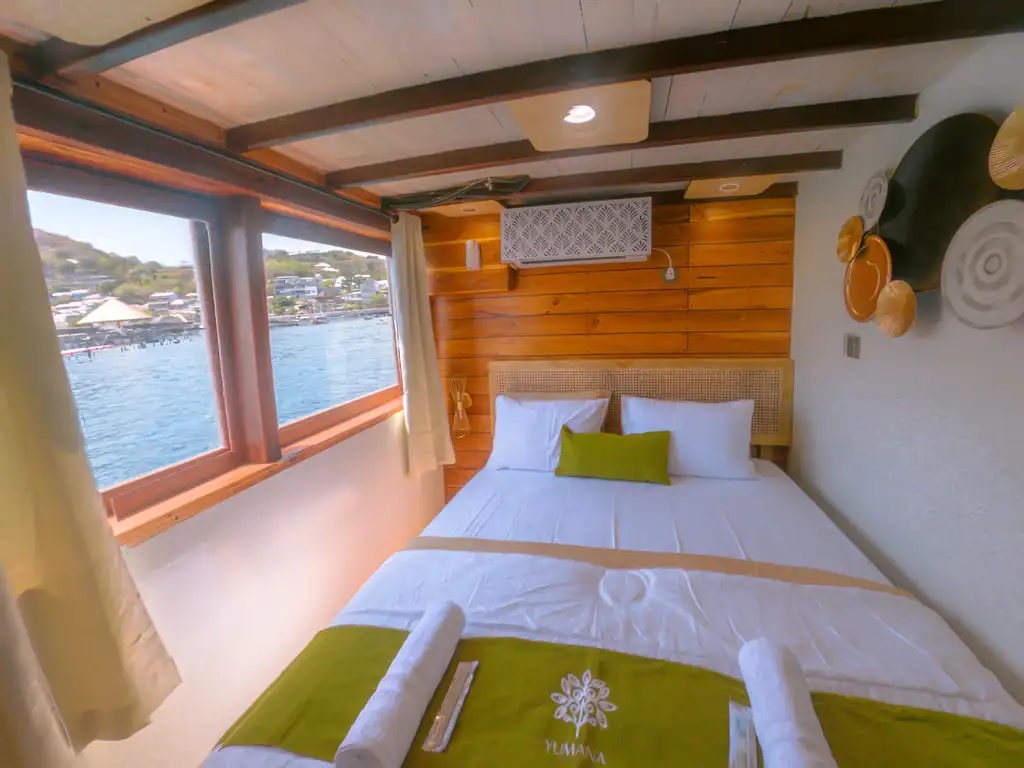
Short answer. You sleep in an air-conditioned cabin on a wooden boat at anchor. The main engine is off overnight; what you hear is a generator, water against the hull and the anchor chain. There is a gentle roll. And you will be woken around 04:30 for Padar.
What is the first night actually like?
Most first-timers have one of two fears: that it will be like a cruise ship, or that it will be like camping. It is neither. A phinisi is a working wooden vessel converted into a small hotel — eight cabins on Yumana, air conditioning in each, a private bathroom, a proper bed with linen. It is closer to a small boutique guesthouse that happens to move.
The unfamiliar parts are sound and motion, not comfort. Wood transmits noise differently from concrete: you hear the sea through the hull, footsteps on the deck above, the anchor chain shifting when the boat swings on the tide. None of it is loud. All of it is new, and new is what keeps people awake on night one.
Hour by hour through a night at anchor
| Time | What is happening | What you hear |
|---|---|---|
| 17:00–18:30 | Anchor down at the evening anchorage; sunset from the sky deck | Main engine shuts down; anchor chain runs out |
| 19:00 | Dinner served on deck or in the dining room | Generator hum, conversation |
| 21:00–22:00 | Most guests turn in; crew rig for the night | Water against the hull, occasional deck footsteps |
| Overnight | Vessel swings gently on the anchor with the tide | Steady generator, chain shifting, light creak of timber |
| 04:15–04:30 | Wake-up call for the Padar sunrise trek | Coffee going on, crew moving, tender lowered |
| 07:00 | Back on board, breakfast, anchor up | Main engine starts; the day begins |
The single most useful thing to know: you are not sailing overnight. Crossings happen in daylight. At night the boat sits at anchor in sheltered water, and the motion is a slow swing rather than the pitching you get underway. People who worry about seasickness usually sleep better than they expected — our guide to seasickness on a Komodo liveaboard goes through this properly.
Where is it quietest — a noise map by deck
| Deck | Cabins | Motion | Noise character |
|---|---|---|---|
| Upper | Signature II & III, Royal Suite | Most movement (highest above the waterline) | Quietest — furthest from machinery, closest to deck footsteps |
| Main | Signature I | Moderate | Central; some lounge and galley activity nearby |
| Lower | Superior, Deluxe | Least movement | Closest to the water and to machinery hum |
There is a genuine trade-off here and no universally right answer. Lower deck: least motion, most mechanical background. Upper deck: quietest air, more sway, and a view. Light sleepers who are not motion-sensitive should take the upper deck. Anyone nervous about movement should take the lower and accept the hum. The full breakdown of the eight cabins is on our cabin comparison and deck plan.
Does the air conditioning run all night?
Cabin air conditioning runs on generator power, and Yumana carries twin generators for exactly this reason — redundancy matters when the alternative is eight hot cabins. There is a hum. It is the price of a cool cabin in equatorial humidity, and after night one most guests stop hearing it entirely.
Practical tips that work: set the cabin cool before dinner rather than at bedtime, keep the door closed so the unit is not fighting the corridor, and do not open a porthole with the air conditioning on.
Five things that will genuinely help you sleep
- Earplugs. The cheapest upgrade to your trip. Bring foam ones.
- An eye mask. Deck lights and a 04:15 alarm make dark sleep valuable.
- Lay out your Padar kit before bed — shoes, torch, camera. Fumbling in the dark wakes your cabin-mate and costs you ten minutes.
- Hydrate but taper. You have been in salt water and sun all day; drink through the evening, not at midnight, because a phinisi bathroom in the dark is not where you want to be at 02:00.
- Go up on deck if you wake. The night sky over a Komodo anchorage, with no light pollution for many kilometres, is one of the trip’s genuine highlights and almost nobody sees it.
What about bathrooms, water and towels?
Each cabin has its own bathroom with a shower. Yumana carries 13,000 litres of fresh water, which is generous for a vessel of this size on a two- to four-night route, but it is finite and it cannot be topped up at sea. Take short showers, rinse salt off on deck first where a deck shower is available, and you will never think about it again.
Towels are provided for cabin and deck. Bring nothing beyond your own toiletries.
What time does the day really start?
Early, and you should plan your evening around that. A liveaboard’s whole advantage is being at Padar before the day boats arrive, which means a wake-up in the region of 04:15 to 04:30 on the trekking morning. Dinner is around 19:00 and most guests are asleep by 22:00 without being told to be. Nobody stays up late twice.
The full rhythm, with indicative hours across every day of the sailing, is on our day-by-day Komodo itinerary, and what that 04:30 alarm actually buys you is described in our honest account of the Padar sunrise climb. Our parent operator’s overview of life on board covers the same rhythm across the wider fleet.
Frequently asked questions
Is it noisy sleeping on a phinisi liveaboard?
Quieter than most people expect. The main engine is off at anchor overnight; what remains is generator hum, water against the hull and occasional deck movement. Earplugs solve the rest.
Does the boat sail during the night?
On standard Komodo routes, no — crossings are made in daylight and nights are spent at anchor in sheltered water. That is why motion overnight is a slow swing rather than pitching.
Which cabin is best for a light sleeper?
Upper-deck cabins are furthest from machinery and generally the quietest, at the cost of more movement. Lower-deck cabins move least but sit closer to mechanical noise. Choose according to which bothers you more.
Is there air conditioning in the cabins at night?
Yes. Cabins are air-conditioned and the vessel carries twin generators to support them. Set your cabin cool before dinner and keep the door closed for the best result.
What time is the wake-up call?
Around 04:15 to 04:30 on the Padar morning, adjusted by the captain for sunrise and tide. Other mornings are more civilised, typically with breakfast from around 07:00.
Can I shower on board?
Yes, every cabin has a private bathroom with a shower, supplied from the vessel’s 13,000-litre fresh-water tanks. Keep showers short since water cannot be replenished at sea.
Planning your Komodo sailing?
Yumana Liveaboard is a 32-metre wooden phinisi operated by Komodo Luxury out of Labuan Bajo. Send your dates and headcount and you will get live availability, the cabins still open and a written quote — no deposit needed to ask.
WhatsApp +62 811 3823 875 · Email sales@komodoluxury.com