
Padar Island Sunrise Trek: The 4:30am Climb, Honestly Described

admin
July 31, 2026
10 min read
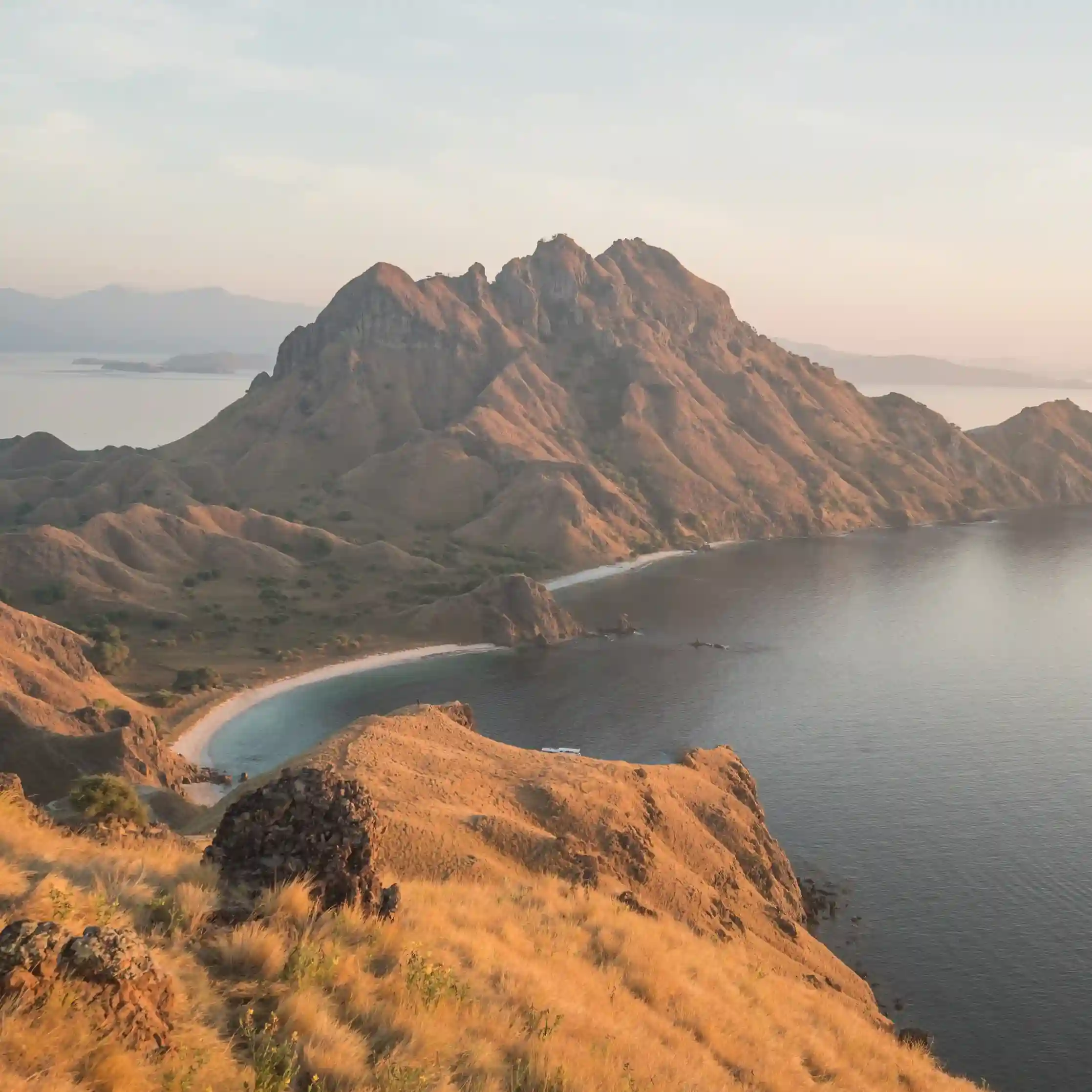
Short answer. The Padar sunrise trek is roughly 30 to 45 minutes of stepped uphill walking from the tender landing to the top viewpoint, started in the dark at around 04:30 from the boat. It is short, steep in places, and entirely doable in normal fitness — but it is a genuine climb, not a stroll.
What does the Padar climb actually involve?
Padar Island sits between Komodo and Rinca, and it is the image that sold you the trip: three curved bays fanning out below a sawtooth ridge. Getting that view means a pre-dawn transfer by tender to a small concrete jetty, then a marked path that climbs the spine of the island in a series of stepped sections and packed-earth switchbacks.
There are three recognised stopping points. The first viewpoint comes up quickly — ten to fifteen minutes — and already gives you the classic three-bay composition. The second sits a little higher with a cleaner foreground. The third, at the top, is the widest angle and the one most people are chasing. The gradient increases with each stage; the final push is the steepest part of the walk.
What is the timing, hour by hour?
| Time (indicative) | What happens | Note |
|---|---|---|
| 04:15–04:30 | Wake-up call, coffee and tea on the main deck | Light breakfast follows after the trek, not before |
| 04:40 | Tender transfer to the Padar jetty | Head torch or phone torch essential |
| 04:50–05:30 | The climb | 30–45 min at a steady, unhurried pace |
| 05:30–06:15 | Sunrise and photography from the ridge | The light window is short; be in position early |
| 06:15–06:50 | Descent and tender back | Descent is faster but harder on knees |
| 07:00 | Breakfast on board, anchor up | Boat moves on while you eat |
These are indicative hours. Sunrise moves through the year, tide affects the jetty landing, and the captain sets the actual call time the evening before. What does not change is the principle: liveaboard guests are on the ridge before the day boats from Labuan Bajo have finished their crossing.
How fit do you need to be?
Most reasonably mobile adults manage the full climb. The honest constraints are heat, footing and knees rather than cardiovascular fitness. Even at 05:00 the air is humid, and the descent on loose surface is where people slip.
If you have knee problems, vertigo, or you are travelling with young children or older parents, stopping at viewpoint one is a completely legitimate decision. The photograph everyone recognises is available from the first and second viewpoints. Nobody on our crew will make you feel you failed — we would much rather you enjoyed the morning than limped through the rest of the trip.
Wear closed shoes with grip. Trainers are fine; trail shoes are better. Flip-flops are the single most common mistake, and they are genuinely dangerous on the descent. Carry water. Leave the big camera bag if you are unsure — hands free matters more than a second lens.
What are the photography conditions like?
The classic frame is wide: something in the 16–24 mm range on full frame, or the ultrawide on a modern phone, held in landscape from the ridge with the three bays fanning below. A mid-range zoom is useful for compressing the ridgelines behind. The best colour is the fifteen minutes before the sun clears the horizon; the best contrast on the bays comes twenty minutes after, once light reaches the water.
Take a small microfibre cloth. Humid pre-dawn air fogs lenses badly when you come out of an air-conditioned cabin, and half the ruined Padar shots are simply condensation. Drones are restricted in parts of the park and busy ridges are not the place to launch without asking — check with the crew first.
What happens if the weather is against it?
Padar is exposed. In strong wind or heavy swell the tender landing becomes unsafe, and there are mornings when low cloud means there is simply nothing to see from the top. The captain makes that call, and it is final — we would rather move the schedule than land guests badly on a wet jetty in the dark.
When it happens we substitute: a later Padar attempt if the route allows, or a swap to another high point such as the Gili Lawa Darat ridge, which gives a comparable elevated view over a sheltered anchorage. This is part of why we describe the route as Yumana’s own rather than a fixed timetable. You can see how the substitutions work across a whole sailing in our day-by-day Komodo itinerary with indicative hours.
Which trip length gives you the best Padar morning?
Every Yumana sailing includes a Padar attempt. The difference is margin. On the 3D2N Komodo open trip aboard Yumana there are two mornings inside the park, so a weathered-out sunrise can often be retried. On a single-night sailing there is only one shot. If Padar is the reason you are coming, book length, not luck.
For a wider view of how this stop sits alongside the rest of the park’s landmarks, our guide to the underrated Komodo stops most guests remember covers the places that quietly compete with Padar for best-morning honours. And if you are still deciding between vessels and formats, our parent company’s overview of Padar on our Komodo routes shows how the same climb is scheduled across the wider fleet.
Frequently asked questions
How long is the Padar Island sunrise trek?
Around 30 to 45 minutes each way at a steady pace to the top viewpoint, with the first viewpoint reached in about 10 to 15 minutes. Add 30 to 45 minutes on the ridge for sunrise and photographs.
How difficult is the Padar hike?
Moderate. It is short but stepped and steep in sections, taken in the dark on uneven ground. Normal fitness is enough; grippy closed shoes and a torch matter more than training.
What time do you leave the boat for Padar?
Typically a 04:15 to 04:30 wake-up with the tender leaving around 04:40, adjusted by the captain for sunrise time and tide. Breakfast is served after the trek, back on board.
Can children or older travellers do the Padar trek?
Often yes, especially to the first or second viewpoint, which still gives the famous three-bay view. The top section is steeper and looser. Go at your own pace and turn around whenever you want — the tender waits.
Is Padar the same island as Komodo Island?
No. Padar is a separate island between Komodo and Rinca, and it has no dragon trekking. Dragons are visited at Loh Liang on Komodo Island or Loh Buaya on Rinca, which are different stops on the same route.
What if the sunrise is cloudy?
It happens, and the ridgeline view is still worth the walk in flat light. Where the schedule allows we will try again the following morning; if conditions make the landing unsafe the captain substitutes another elevated stop.
Planning your Komodo sailing?
Yumana Liveaboard is a 32-metre wooden phinisi operated by Komodo Luxury out of Labuan Bajo. Send your dates and headcount and you will get live availability, the cabins still open and a written quote — no deposit needed to ask.
WhatsApp +62 811 3823 875 · Email sales@komodoluxury.com