
Rinca or Komodo Island: Where You Actually See the Dragons

admin
July 31, 2026
9 min read
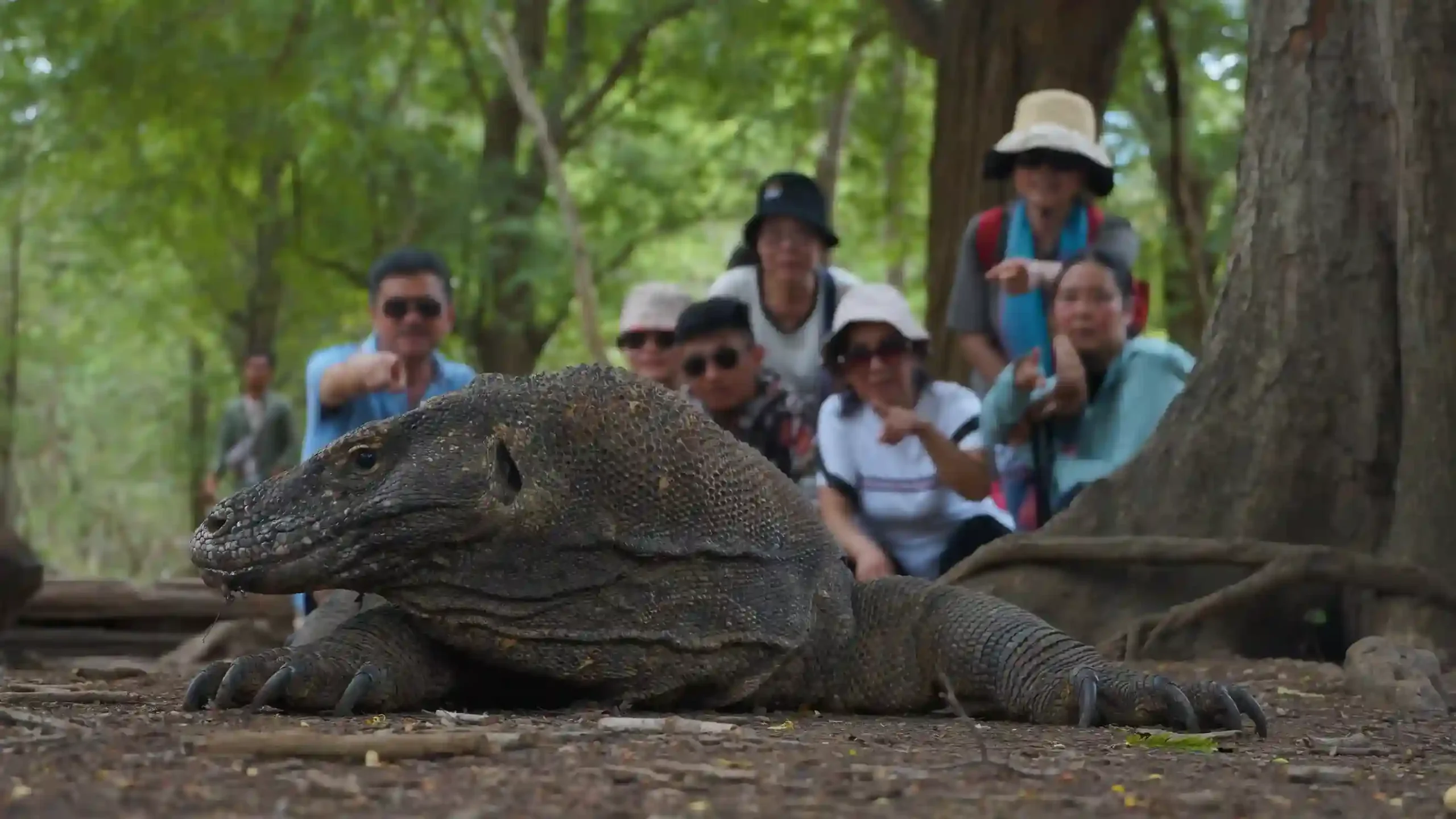
Short answer. Both islands work. Rinca’s Loh Buaya gives denser dragon sightings on a shorter, hotter loop; Komodo Island’s Loh Liang offers longer trails and the more famous name. Most multi-night Komodo itineraries visit one of the two, and either delivers wild Varanus komodoensis at close range with a ranger.
Rinca or Komodo — which island should you pick?
The question comes up because the park’s name and the animal’s name are the same, so travellers assume Komodo Island is the only real place to see them. It is not. Komodo dragons live across Komodo, Rinca, Gili Motang, Nusa Kode and parts of western Flores, and the two islands with organised visitor trails are Komodo (at Loh Liang) and Rinca (at Loh Buaya).
The practical difference is concentration versus scale. Loh Buaya on Rinca is compact: the dragons congregate near the ranger station and kitchen area, the loops are short, and sightings within the first ten minutes are common. Loh Liang on Komodo has a larger network of trails, more varied terrain, deer and buffalo along the way, and a slightly more spread-out dragon population — more walking, more landscape, marginally less certainty.
How do the two trails compare?
| Rinca — Loh Buaya | Komodo Island — Loh Liang | |
|---|---|---|
| Typical short loop | Around 30–45 minutes | Around 45–60 minutes |
| Longer options | Medium and long loops with a hill viewpoint | Medium and long trails, more of them |
| Terrain | Dry savannah, some short climbs, elevated boardwalk near the station | Forest and savannah mix, gentler underfoot |
| Sighting odds on a short loop | Very high — dragons often visible from the boardwalk | High, but more walking may be needed |
| Other wildlife | Water buffalo, deer, macaques, megapode nests | Deer, wild boar, birdlife |
| Crowding | Busy mid-morning | Busy mid-morning |
| Ranger accompaniment | Mandatory | Mandatory |
Both are hot, and both are best done early. The dragons themselves are ectotherms: in the cool of the morning they are sluggish and out in the open warming up, which is exactly when you want to see them. By midday they have moved into shade and you walk further for less.
What are the safety rules, and what is myth?
Rangers carry a forked stick, and the stick is not decoration. A Komodo dragon is a three-metre predator with serrated teeth and glands that deliver an anticoagulant venom — the mechanism described in the peer-reviewed work by Fry and colleagues in 2009, which replaced the older “septic bacteria” story. Bites are rare but serious, and every rule you are given exists because of a recorded incident.
- Stay with your ranger and inside the group. Straggling behind is the single most common mistake.
- Keep the briefed distance and never position yourself between a dragon and cover or water.
- Do not run. Dragons can sprint short distances faster than you expect.
- No food. Do not carry snacks onto the trail.
- Watch the ground and low bushes, not just the path ahead. Juveniles use trees; adults rest in scrub.
On the frequently repeated claim about menstruating visitors: what actually happens is that rangers ask anyone with an open wound or who is menstruating to declare it, because dragons have an acute sense of smell for blood. It is a precaution and a briefing question, not a ban, and rangers handle it discreetly. Ask at the post if it affects you rather than relying on internet folklore.
What is the best time of day?
Early. First landing of the day, ideally before 09:00. You get cooler air, more active animals, and you are ahead of the day-boat fleet from Labuan Bajo. That timing is one of the structural advantages of sleeping inside the park rather than commuting into it — a point our comparison of phinisi, speedboat and day trip formats covers in more detail.
Bring closed shoes, a hat, water and sunscreen. The savannah on Rinca offers essentially no shade, and the walk that looked trivial on paper is genuinely draining at 30 °C with humidity.
Which one does Yumana visit?
Our route includes a dragon trek at Loh Liang on Komodo Island or Loh Buaya on Rinca, selected by the captain on the day for sea state, anchorage conditions and crowding. Longer sailings have room to work both into the schedule. We deliberately do not print a fixed promise of one island, because doing so would mean either misleading you or sailing into a bad anchorage to keep a marketing claim.
The full sequence, with indicative hours for the landing, is on our day-by-day Komodo route page. If you want the version of the trip with the most room for both islands plus the northern anchorages, that is the 4D3N full park circuit aboard Yumana. For how dragon trekking is scheduled across other vessels in the group, see our parent operator’s notes on dragon trekking on our itineraries.
Frequently asked questions
Is Rinca or Komodo Island better for seeing dragons?
Rinca’s Loh Buaya generally offers denser sightings on a shorter loop, which suits limited time or limited mobility. Komodo Island’s Loh Liang offers longer, more varied trails. Sighting quality is comparable; the walk is not.
Are you guaranteed to see a Komodo dragon?
No responsible operator guarantees wild-animal sightings, but the odds on either trail are very high, particularly on an early-morning landing when the animals are out warming up.
Can you visit the dragons without a ranger?
No. Ranger accompaniment is mandatory on both islands and rangers are assigned at the post. The ranger component is part of what your park fees cover.
How hard is the dragon trekking?
The short loops are easy walking on mostly flat ground, 30 to 60 minutes. Heat, not gradient, is the difficulty. Medium and long loops add hills and are noticeably harder in the middle of the day.
Are Komodo dragons venomous?
Yes. Research published in 2009 identified venom glands producing anticoagulant compounds, superseding the older belief that bites were dangerous purely from mouth bacteria. Incidents are rare and the safety rules exist to keep it that way.
What should I wear for the trek?
Closed shoes with grip, light long-sleeved clothing, a hat and sunscreen. Carry water. Leave food behind, and keep bags closed on the trail.
Planning your Komodo sailing?
Yumana Liveaboard is a 32-metre wooden phinisi operated by Komodo Luxury out of Labuan Bajo. Send your dates and headcount and you will get live availability, the cabins still open and a written quote — no deposit needed to ask.
WhatsApp +62 811 3823 875 · Email sales@komodoluxury.com