
What a Phinisi Actually Is: Bulukumba Boatbuilding, Explained

admin
July 31, 2026
9 min read
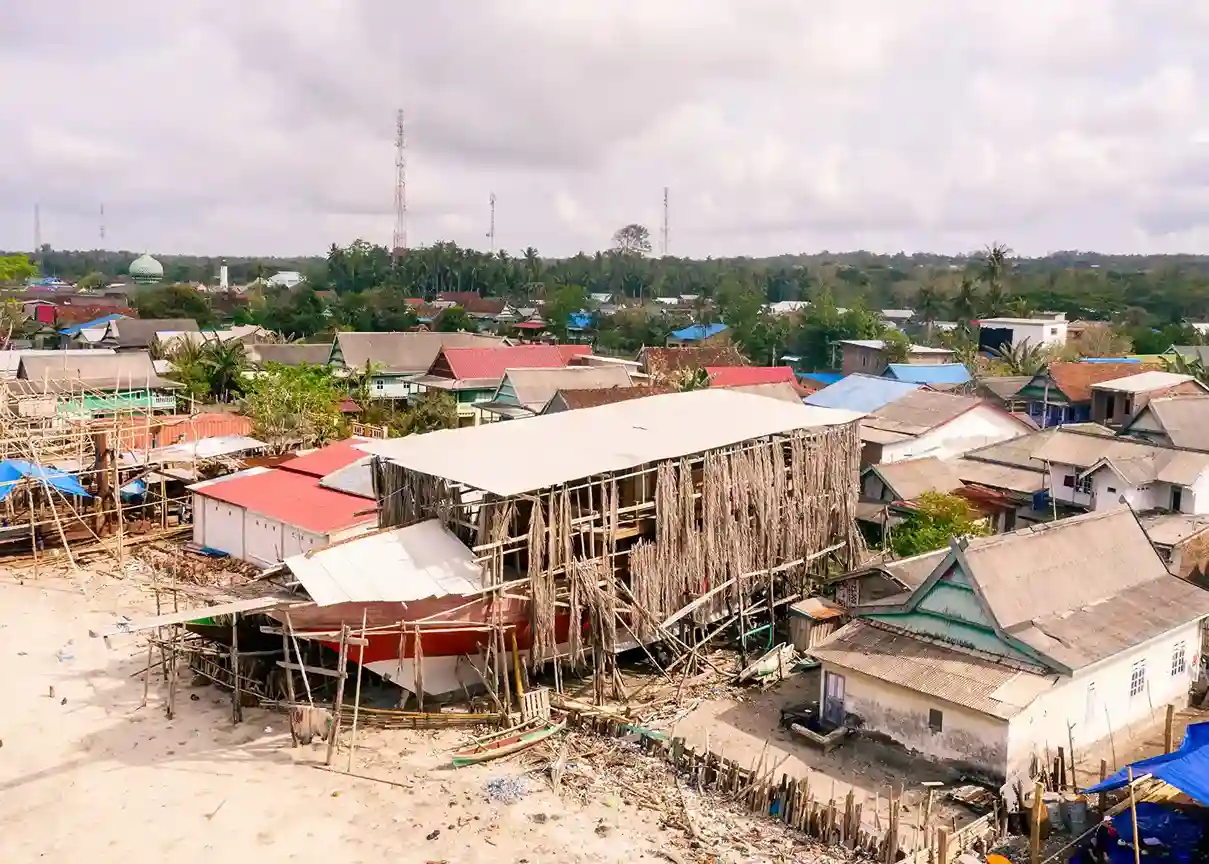
Short answer. A phinisi is a wooden sailing vessel from South Sulawesi, built by hand by the boatbuilding communities around Bulukumba and Tana Beru. The craft is recognised by UNESCO as intangible cultural heritage. Modern liveaboards like Yumana use the same hull tradition with engines, generators and air-conditioned cabins.
Where does the phinisi come from?
The phinisi — also written pinisi — belongs to South Sulawesi, and specifically to the Bugis, Makassarese and Konjo seafaring communities of the island’s southern coast. The boatbuilding villages around Tana Beru, Bira and Ara in Bulukumba regency have been producing large wooden hulls for generations, and they still do, on open beaches, without a shipyard in any modern sense.
In 2017 UNESCO inscribed “Pinisi, art of boatbuilding in South Sulawesi” on the Representative List of the Intangible Cultural Heritage of Humanity. What was recognised was not a boat design but a body of knowledge: how the timber is selected, how the hull is shaped, the ritual and the sequence of construction, and the way the whole thing is transmitted from one generation to the next by working alongside rather than by drawing. That lineage carries straight into today’s charter boats — Elbark was launched in October 2022 on the same edge-joined principle, and the operator sets out how Elbark is built and specified down to beam, tonnage and cabin count.
How is a phinisi actually built?
The part that surprises most people: there are no plans. A master builder — the punggawa — carries the shape of the hull in his head and works it out at full scale as the boat grows on the beach.
The sequence is also inverted from what you might expect. Rather than erecting a frame and planking over it, the builders lay the keel, then fit the hull planks to each other, edge to edge, fastened with wooden dowels. Only once that shell has taken its shape are the internal frames fitted inside it. Ironwood and other dense tropical hardwoods are the traditional timbers. Construction is punctuated by ceremony, from the cutting of the keel to the launch.
Historically these were cargo carriers under sail, moving timber and goods across the archipelago on a rig of two masts and multiple sails — the arrangement that gives the phinisi its recognisable silhouette. Engines arrived in the twentieth century, and the sails on most modern liveaboards are more heritage and sail-assist than primary propulsion.
How does a heritage hull become an eight-cabin liveaboard?
| Specification | Yumana Liveaboard |
|---|---|
| Length × beam | 32 m × 6 m |
| Decks | 3 |
| Cabins | 8, across five categories |
| Cruising speed | 7–10 knots |
| Main engine | Mitsubishi 8D C9 |
| Generators | Double PS120 |
| Fresh water | 13,000 litres |
| Fuel | 8,000 litres |
| Navigation | Compass, GPS, AIS, charts |
| Common areas | Indoor lounge and dining room, sky deck, main-deck sunbathing area |
Read that table as a conversion story. The 32-metre hull is the heritage part. Everything else exists to make it habitable for guests: generators to run air conditioning in eight cabins through an equatorial night, 13,000 litres of fresh water because there is no tap in Komodo National Park, 8,000 litres of fuel because the wind is not a schedule you can sell tickets against.
Note the capacity figure carefully. Yumana’s specification lists a total capacity of 25 persons, which counts everyone aboard including crew. Actual guest berths across the eight cabins come to approximately 16. Any operator implying 25 guests sleep in beds is misreading their own specification — the cabin-by-cabin reality is set out on our cabin comparison and deck plan.
Phinisi or yacht — what is the practical difference?
| Phinisi liveaboard | Motor yacht | |
|---|---|---|
| Hull | Wood, heavy displacement | Fibreglass or steel, often planing or semi-displacement |
| Speed | 7–10 knots | Frequently much faster |
| Motion | Slow, predictable roll | Quicker, sharper motion in chop |
| Deck space | Generous — sky deck plus main deck | Varies, often tighter per metre |
| Character | Regional, traditional, built by hand | Industrial, standardised |
| Maintenance | Continuous timber work; hauled and re-caulked | Lower routine hull maintenance |
For Komodo specifically, the phinisi wins on the things that matter: deck space for a group that spends its days outdoors, a hull motion that suits people who worry about seasickness, and a shallow enough draught for the park’s anchorages. Speed is the one thing you give up, and in a park where the crossings are short and the point is to be there at dawn, speed is the least valuable variable.
How is a wooden vessel maintained and kept safe?
A wooden hull is a living thing and demands continuous attention: inspection, timber replacement, caulking, antifouling, and periodic hauling out. That is ongoing cost and skilled labour, and it is one of the honest differences between operators — a well-kept phinisi looks and feels different from a neglected one within thirty seconds of boarding.
On the safety side, Yumana carries compass, GPS, AIS and charts, twin generators for redundancy, life jackets, a first-aid kit and marine communications, with an experienced Indonesian crew who work this water year-round. Sea-state and route decisions sit with the captain and are final. You can see what that looks like in daily practice on our itinerary page, and what it means for a whole-boat booking on our private charter page. If you are weighing a wooden hull against the alternatives for your own trip, our comparison of phinisi, speedboat and day trip is the practical version of this history. Our parent operator’s account of the phinisi tradition behind our fleet puts Yumana in the context of the other vessels built the same way.
Frequently asked questions
What is a phinisi boat?
A traditional wooden sailing vessel from South Sulawesi, built by hand by Bugis, Makassarese and Konjo boatbuilders around Bulukumba. Modern versions are motorised and converted into liveaboard cruise vessels.
Is the phinisi recognised by UNESCO?
Yes. In 2017 UNESCO inscribed the art of pinisi boatbuilding in South Sulawesi on the Representative List of the Intangible Cultural Heritage of Humanity, recognising the craft knowledge rather than any single vessel.
Do phinisi liveaboards sail under sail power?
Rarely as primary propulsion. Most modern phinisi carry rigs for heritage and occasional sail assist while relying on engines for schedule reliability. Yumana cruises at 7 to 10 knots under power.
How many people can sleep on Yumana Liveaboard?
Approximately 16 guests across eight cabins. The 25-person figure in the specification is total vessel capacity including crew, not the number of guest berths.
Are wooden boats safe?
A properly maintained wooden vessel with modern navigation and safety equipment is a well-proven format — these hulls carried cargo across the archipelago for generations. Yumana carries compass, GPS, AIS, charts, twin generators, life jackets and marine communications.
Where are phinisi boats built today?
Principally around Tana Beru, Bira and Ara in Bulukumba regency, South Sulawesi, where hulls are still shaped on open beaches by master builders working without written plans.
Planning your Komodo sailing?
Yumana Liveaboard is a 32-metre wooden phinisi operated by Komodo Luxury out of Labuan Bajo. Send your dates and headcount and you will get live availability, the cabins still open and a written quote — no deposit needed to ask.
WhatsApp +62 811 3823 875 · Email sales@komodoluxury.com
To see how Bulukumba craftsmanship translates into today’s charter decks, browse the luxury phinisi Komodo guide.